Graduate Audition Requirements

Schedule an Audition - click here now    Voice, string, and *piano performance applicants must complete this online form to schedule an audition. This form will be submitted electronically to us. If you have difficulty with this online form, contact the music graduate admissions office at 814-865-1052. Brass, woodwind, and percussion applicants should arrange an audition directly with a faculty member in the applicant's area. See faculty contact information listed by instrument below.  If the brass, woodwind, or percussion faculty ask you to audition on one of our undergraduate audition days, you will need to complete this on-line form.

*Graduate PIANO auditions will be held on all four Saturday audition dates.  The dates are listed on the graduate schedule an audition form listed above.  If an applicant is unable to meet any of these audition date options, please email Dr. Timothy Shafer, at tps1@psu.edu, to schedule an individual appointment with the piano faculty. Please plan to be here from 10:15 a.m. until 5:00 p.m., as the piano faculty may schedule meeting times and call-back auditions with some candidates. Available teaching assistantships will be offered in early March, and late auditionees will be at a competitive disadvantage.

S T R I N G S
Violin
Viola

Cello
Double Bass

W I N D S
Flute
Oboe
Clarinet
Bassoon

Saxophone
B R A S S
Trumpet
French Horn
Trombone
Euphonium
Tuba

Percussion
Piano
Voice
Composition
Conducting


BASSOON

Auditionees should prepare a program of at least twenty-five minutes duration containing repertoire of the level that would be suitable for an undergraduate performance major's senior recital. This program should include material from a range of historical periods and may include individual movements and/or etudes. Auditionees are encouraged to confer with the instructor regarding audition repertoire.

Instructor: Daryl Durran
(814) 865-3220
dwd3@psu.edu

CELLO

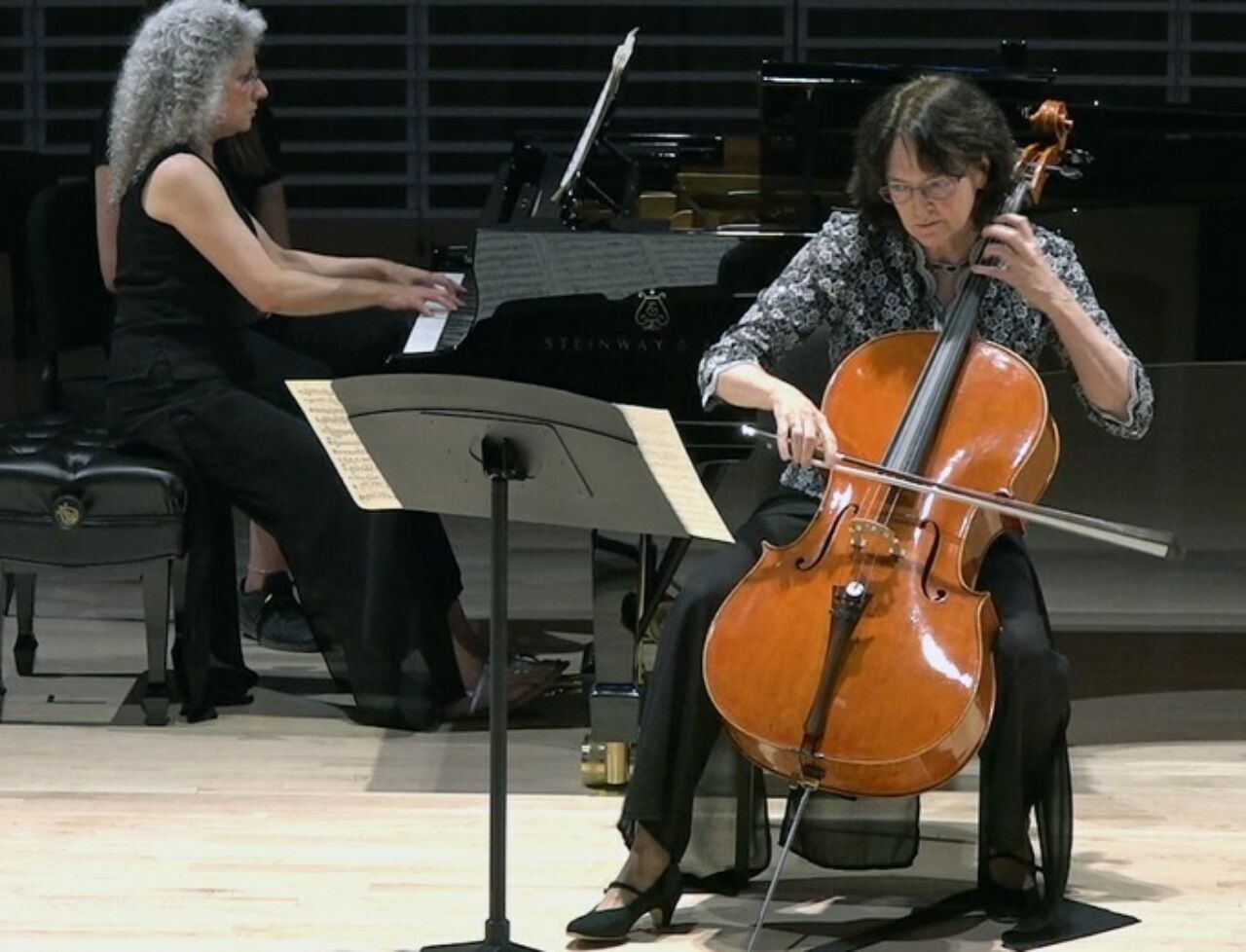
Graduate auditionees must prepare 25 minutes of advanced repertoire showing contrasting styles. Auditionees are encouraged to contact the instructor regarding audition repertoire.

Instructor: Kim Cook
kdc3@psu.edu

CLARINET

Graduate auditions should reflect a mastery of the fundamentals of clarinet playing including a high degree of technical achievement, articulation, and tonal control. The audition should reveal a mature approach to phrasing and expressiveness. Auditions will last about twenty-five minutes and should include the following:

  1. A repertoire list of previously studied literature and a biographical statement,
  2. All major and minor scales (harmonic and melodic) with arpeggios,
  3. One complete solo piece (i.e. concerto, sonata, French conservatory piece),
  4. Two additional works representative of different style periods. These may be two contrasting movements from two contrasting pieces,
  5. Minimum of five excerpts from standard orchestral repertoire.

Instructor: Dr. Anthony J. Costa
(814) 863-4410
ajc26@psu.edu

COMPOSITION

Applicants to the graduate program in composition must submit a portfolio of recent work including scores and, if possible, high-quality recordings. Also, a sample of the applicant's music manuscript must be included (one of the scores submitted can fulfill this requirement if it is hand-copied). No originals should be sent, only high-quality bound copies on suitable paper. In addition, a sample of writing on music should be included. A paper written for an undergraduate music course is acceptable.

Instructor: Paul Barsom
(814) 863-4409
prb4@psu.edu

DOUBLE BASS

Students auditioning for a master of music degree in double bass performance should be prepared to play two contrasting movements of a standard concerto (Vanhal, Bottesini, Koussevitsky, etc.) or sonata (Misek, Schubert) as well as the following orchestral excerpts:

Beethoven 5th Symphony (3rd movt.)

Beethoven 9th Symphony: Recitative

Verdi: "Othello" solo

Prokofiev: Solo from "Lieutenant Kije"

Mozart Symphony No. 40 (1st movt.)

Instructor: Rob Nairn
(814) 865-8339
rcn3@psu.edu

EUPHONIUM/TUBA

Euphonium
Graduate euphonium candidates should prepare 15 minutes of solo literature representative of your solo repertoire and highest proficiency level and 3 stnadard band or orchestral excerpts. Selection of literature should include different stylistic periods. You should also be prepared to play 2-octave major, harmonic, and melodic minor scales from memory, and to sight-read. Reading of both bass and treble clefs and performance techniques and skills appropriate to the graduate level are required. If you have recently played a recital, please bring with you a CD or tape, if available, to supplement your audition.

Tuba
Graduate tuba candidates should prepare 15 minutes of solo literature representative of your solo repertoire and highest proficiency level and 3 standard orchestral or band excerpts. Selectionof literature should include different stylistic periods. You should also be prepared to play 2-octave major, harmonic, and melodic minor scales from meemory, and to sight-read. Performance techniques and skills appropriate to the graduate level are required. If you have recently played a recital, please bring with you a CD or tape, if available, to supplement your audition.

Instructor: Velvet Brown
(814) 863-2126
vmb10@psu.edu

FLUTE

For admission to the Master of Music program in Flute Performance, please prepare the following:

Mozart - Concerto in G major, KV 313, First movement with cadenza.
Two contrasting works from different style periods (one for solo flute) and a minimum of two orchestral excerpts.  Demonstration of memory is strongly recommended.  If the applicant wishes, a cassette tape, CD or video of recent performances (ex. senior recital) may be submitted in advance of the audition for additional evaluation.  Further guidance in preparing for the audition can be obtained by contacting:

Instructor: Dr. Naomi Seidman
(814) 865-0175 - studio
(512) 299-3030 - cell
nks11@psu.edu

FRENCH HORN

Candidates for a master of music in horn performance should prepare the following:

1. Orchestral excerpts

- Beethoven Eroica - 2nd horn, scherzo
- Shostakovich Symphony #5 - tutti low horn passage
- Brahms Symphony #2 - solo in D, solo in B natural
- Dvorak New World Symphony - 1st horn, allegro

2. Two movements from contrasting solo works (one each)

3. Sight-reading

Instructor: Lisa Bontrager
(814) 865-3221
ljb5@psu.edu

OBOE

Candidates for graduate oboe study should be able to perform either a major sonata or concerto (i.e. Poulenc, Hindemith, Saint-Saens, Mozart Concerto, etc.), an etude demonstrating technical abilities, and two contrasting orchestral excerpts from any period. Accompaniment is not necessary.

Instructor: Timothy Hurtz
(814) 863-2048
tfh2@psu.edu

PERCUSSION

Graduate percussion applicants should prepare a recital program of approximately forty-five minutes of music. Included should be a major work for four-mallet marimba, other four-mallet music of a contrasting style for either marimba or vibraphone (jazz is acceptable), a two-mallet work for marimba or xylophone demonstrating advanced technical ability, an advanced non-rudimental solo or etude for snare drum, an advanced rudimental-style snare drum solo, and common orchestral excerpts for timpani as well as all standard orchestral percussion instruments. Demonstration of technique and knowledge of musical styles on the drum set is also expected. A thorough knowledge of all scales, arpeggios, and standard snare drum rudiments should be demonstrated. Accompaniment in solo works is not required. If the applicant wishes, a cassette tape, CD or video of recent performances (ex. senior recital) may be submitted in advance of the audition for additional evaluation. Further guidance regarding appropriate repertoire and preparation for the audition can be obtained by contacting:

Instructor: Dan C. Armstrong
(814) 863-4418 - studio
(814) 234-7267 - home
dxa5@psu.edu

PIANO

Those applying for graduate piano study should prepare a program equivalent to the requirements for a senior-level recital at Penn State, which might include, for example, a complete Beethoven, Haydn, or Mozart sonata of significant size and difficulty; a Chopin Ballade or comparable romantic work; a Baroque work comparable to an advanced Prelude and Fugue of the W.T.C. by J.S. Bach; perhaps an Impressionist or Contemporary group of similar difficulty. While not every program will include all these categories, mature technical and artistic accomplishment should be demonstrated. The program should total forty to sixty minutes of music.

Live audition is preferred when possible; however, international students and others from distant localities are sometimes admitted on the strength of a recital video (DVD). To substitute a video recording, refer to these two documents for instructions:

Click here for audition requirements for the DMA in Piano Performance

Contact: Dr. Steven Smith
(814) 863-4401
shs1@psu.edu

SAXOPHONE

Auditionees should prepare the following:

1. All major and minor scales (harmonic and melodic), full range; full range in 3rds; full range in 4ths.

2. Repertoire selections, duration of approx 20-25 minutes of music, including at least one complete work.

       (List of examples below)

3. Movement of a transcribed work from any composer before 1900, either published or transcribed by the auditionee.

4. JAZZ SKILLS (optional):

In addition to items above, students may perform jazz selections.

            - Interpret the melody of, and improvise on, a jazz standard tune or blues.

            - Perform a transcription of a recorded jazz solo, playing along with the recording.    

Students must bring their own CD/iPod recording of the accompaniment and transcriptions with they will play.

5. OTHER: Students may be asked to demonstrate additional skills such as sight-reading, interpretive variations in the solo repertoire, ear training, altissimo, transposition, and scale variations.

Examples of appropriate repertoire:

(This is only a partial list of examples. The selected piece need not be on the list to be acceptable. Some pieces from the Undergraduate list are also acceptable. Please feel free to contact Dr. David Stambler with any questions about audition materials)

Absil - Sonata
Albright - Sonata
Alessandrini - Boite de Pandore (Pandora's Box)
Alessandrini - Cronos
Bassett - Concerto
Bassett - Duo Concertante
Bassett - Music for Saxophone & Piano
Berio - Sequenza VIIb (soprano)
Berio - Sequenza IXb (alto)
Bolcom - Concert Suite
Bolcom - Lilith
Bonneau - Caprice en Forme de Valse
Chambers - Deep Flowers
Cooper - Four Impromptus
Cowell - Air and Scherzo
Creston - Concerto
Dahl - Concerto
Decruck - Sonata
Denisov - Sonata
Desenclos - Prelude, Cadence, et Finale
Etazade - Street Legal
Feld  - Elegie (soprano)
Feld - Sonata (alto)
Feld - Sonata (soprano)
Finney - Concerto
Garrop - Pieces of Sanity
Garrop - Tantrum
Goldstein - Fault Lines
Gotkovsky - Brillance
Gotkovsky - Concerto
Harbison - San Antonio
Husa -  Concerto
Ibert - Concertino da Camera
Jolivet - Fantaisie-Impromptu
Lauba - Balafon; Hard; Hard, Too Hard; Jungle; Steady  Study on the Boogie; Sud; etc.
Larson - Holy Roller
Larsson - Concerto
Lennon -  Distances Within Me
Lennon -  Symphonic Rhapsody
Maslanka - Concerto
Maslanka - Sonata
Muczynski - Concerto
Peck - Upward Stream (Tenor)
Rogers, John - A Savage Calculus
Rogers, John - Breaking (soprano)
Rogers, Rodney - Lessons of the Sky (soprano)
Rogers, Rodney  - The Nature of This Whirling Wheel
Rosse - Le Frene Egare
Rueff - Sonata
Ruggiero - Interplay (soprano)
Sancan - Lamento et Rondo
Scelsi - Tre Pezzi (soprano)
Schmitt - Legende
Stockhausen - In Freundshaft (soprano)
Swerts - Klonos
Swerts - Kotekan
Tomasi  - Concerto
Torke - Concerto (soprano)
Tower - Wings
Wilson - Time Cries, Hoping Otherwise
Wuorinen - Divertimento
Yoshimatsu - Fuzzy Bird Sonata
Zupko - In Transit

Contact: Prof. David Stambler, saxophone
(814) 865-1252
dbs12@psu.edu

TROMBONE

Students interested in the master's degree in trombone performance should contact Professor Mark Lusk. Students under serious consideration will be requested to attend Penn State for an extended visit during which they will perform an extensive audition as well as meet with and teach the undergraduate trombone majors.

Instructor: Mark Lusk
(814) 863-4415
marklusk@psu.edu

TRUMPET

Candidates for graduate trumpet study should prepare a variety of both solo repertoire and etudes as well as numerous orchestral excerpts. They will also be expected to sight-read.

Optional: jazz improvisation and jazz lead trumpet.

Instructor: Dr. Langston Fitzgerald III
(814) 863-4414
ljf11@psu.edu

VIOLA

Students contemplating a graduate performance degree should prepare:

1. One movement of a major concerto (e.g. Walton, Bartók, Hindemith, Stamitz)

2. Two contrasting movements of a solo suite, sonata, or partita by Bach

3. At least one other piece or etude in a contrasting style

At least one piece should be memorized. The audition committee may request three-octave scales and arpeggios.

Instructor: Dr. Timothy Deighton
(814) 863-4406
tjd8@psu.edu

VIOLIN

Applicants intending to pursue the Master of Music Performance or Professional Performance Certificate should prepare the following:
- a movement from a romantic or twentieth-century violin concerto
- two movements of an unaccompanied partita or sonata by J.S. Bach
- a contrasting work or etude (Dont, Rode, Gavinies, or a caprice by Wieniawski or Paganini)

Instructor: James Lyon
(814) 863-4411
jpl5@psu.edu

Instructor: Max Zorin, violin
(814) 865-5569
mxz16@psu.edu

VOICE

Applicants wishing to pursue either the master of music in performance-voice or the master of music in pedagogy and performance with track in voice must prepare at least five memorized art songs or arias representing various languages and/or style periods. At least one of the selections must be in English and one of the selections must be an opera or oratorio aria sung in the original language. Applicants should furnish a repertoire list either before or at the time of the audition.

For more information on the master of music in performance-voice and the master of music in pedagogy and performance with track in voice please CLICK HERE

Applicants wishing to pursue the master of fine arts in voice pedagogy for musical theatre should apply through the School of Theatre. For more information on the master of fine arts in voice pedagogy for musical theatre please CLICK HERE

Contact: Professor Jennifer Trost
(814) 863-4402
jlt29@psu.edu